
Enabling, sustaining, and ensuring the highest possible performance along with continued application availability is a major goal for all mission critical Oracle applications to meet the demanding business SLA’s, all the way from on-premises to VMware Hybrid Clouds
- Slow database Archivelog performance will considerably slow the database down resulting in breach of SLA’s.
- Slow database Backups will result in database backup’s spilling outside the production backup window resulting in disruption of database operations and breach of SLA’s as well.
- Non-production workloads e.g., Development, Test, QA, Staging, Functional, Pre-Production etc are equally important as the Production workloads, as they are key entities and instrumental to any Production workload success and adds to space demands with the ever-increasing database sizes.

The goal is to provide Comparable performance, Storage savings and meet the Business SLA’s by using VMware Cloud Flex Storage for Oracle Archivelogs, Oracle Backups and Oracle Non-Production workloads.
Summary of blogs
The first blog Providing Performance and Storage savings using VMware Cloud Flex Storage for Oracle Archivelogs is an exercise to evaluate the feasibility and showcase the advantages of using VMware Cloud Flex Storage for business-critical Oracle workloads on VMware Cloud on AWS as a viable & comparable Storage option for Oracle Archivelog files destination.
The second blog Providing Storage savings and Comparable performance using VMware Cloud Flex Storage for Oracle Backups is an exercise to evaluate VMware Cloud Flex Storage as a viable & comparable Storage option for Oracle backups destination.
The third blog Providing Storage savings and Comparable performance using VMware Cloud Flex Storage for Oracle Non Production workloads is an exercise to evaluate VMware Cloud Flex Storage as a viable & comparable Storage option for Oracle non-production workloads.
This blog is not meant to be a performance benchmarking-oriented blog in any way. Remember, any performance data is a result of the combination of hardware configuration, software configuration, test methodology, test tool, and workload profile used in the testing, so the performance improvement I got with my workload in my lab is in no way representative of any real production workload which means the performance improvements for real world workloads will be better.
Continue reading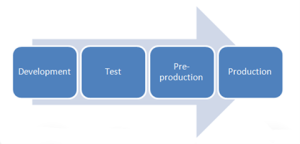








You must be logged in to post a comment.